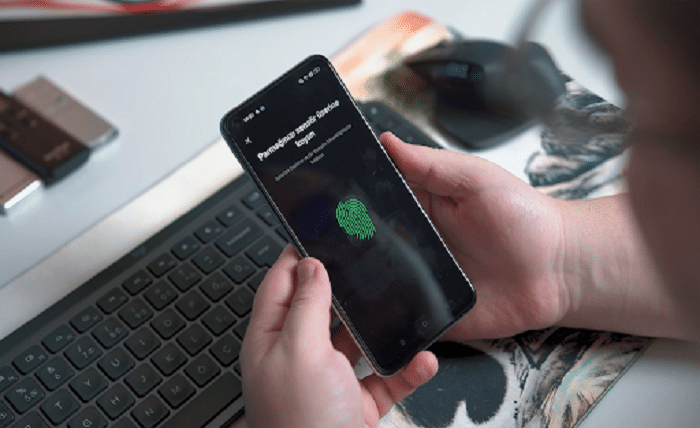
A parent in Selangor logged into her son’s school portal last month to pay for a field trip and was asked to scan her identity card and blink at the camera before the payment screen even loaded. Two years ago the same portal only needed a username and a password. Now it behaves like a mobile banking app, cross-checking a government ID against a live selfie before it lets anyone past the login screen at all.
The shift is not limited to education or finance. Any service that moves money or protects a minor’s data has started borrowing the same toolkit: a document scan, a face match, a database lookup. Platforms offering crypto casino games run a near-identical check before a withdrawal clears, matching a submitted ID card against issuing records within a couple of minutes rather than days.
How Identity Checks Moved From Banks to Everyday Logins
Banks built this machinery first, pushed by anti-money-laundering rules that made “know your customer” a legal requirement rather than a courtesy. A teller in the 1990s asked to see a passport once, at account opening. A banking app in 2026 asks again every time a device or location looks unfamiliar, comparing a fresh selfie against the one on file in under ten seconds.
Schools adopted the same logic for a different reason: guardianship, not money laundering. A district in Selangor started requiring ID-matched logins after two incidents where a non-custodial relative accessed a child’s attendance and health records. The fix borrowed directly from banking compliance software rather than building anything education-specific from scratch.
Inside a Modern Verification Stack
A typical check runs three layers in sequence. First, optical character recognition reads the document’s printed fields and checks them against the chip embedded in newer ID cards. Second, a liveness test asks the user to blink, turn their head, or read a number aloud, which stops someone from holding up a photograph. Third, the extracted data is matched against an issuing authority’s database in real time.
A school portal only needs the first two layers for most logins, reserving the database lookup for account creation. A payments app or a gambling platform usually runs all three every session, because the cost of a wrongly approved account is higher and immediate. The order also matters for speed: running the cheap liveness check first rejects an obviously fraudulent attempt in under a second, without touching the slower, rate-limited government database, which is why a school portal can process a queue of parents during morning drop-off without visible lag.
Document and biometric checks
Document scanning now reads over 200 ID formats worldwide, pulling the name, birth date and document number straight from the printed text and the embedded chip where one exists. A mismatch between the two triggers a manual review instead of an automatic rejection, since a scratched card can fail OCR without being fraudulent.
Face matching compares the selfie against the document photo using roughly 80 measured points on the face, tolerating years of aging but flagging a printed photo held up to the camera within a second or two.
| Sector | Typical check | Average time |
| Banking app | Document + face match | 8-15 seconds |
| School portal | Document + liveness | 10-20 seconds |
| Gambling platform | Document + database lookup | 1-3 minutes |
Behavioral and device signals
Beyond the document itself, systems now score the device and the way it is used. Typing rhythm, scroll speed and the angle a phone is held at all feed a risk model that runs quietly in the background, without asking the user anything extra.
A login from a new city, on a new device, with unusually fast form-filling raises the risk score even if the document scan passes cleanly. That combination is what catches most stolen-identity attempts, since a fraudster rarely matches the original user’s device habits, even with a stolen or borrowed document in hand.
What families should expect next
More districts are piloting ID-matched portals for exam registration and report cards, following the same vendor contracts banks already use. Data retention policies vary widely, from immediate deletion after a match to storage for several years, so a reasonable question for any parent to ask is how long a scanned ID card is kept, in what format, and who at the district or vendor level can access it after the check completes.
The broader pattern is simple: verifying a person now costs a few seconds and a working camera, wherever the login happens to be. What used to separate a bank from a school portal is disappearing, one blink-test at a time.